SEVEN ENGINES SIGNALS
Nine researched ES/MES signal strategies. One TradingView indicator.
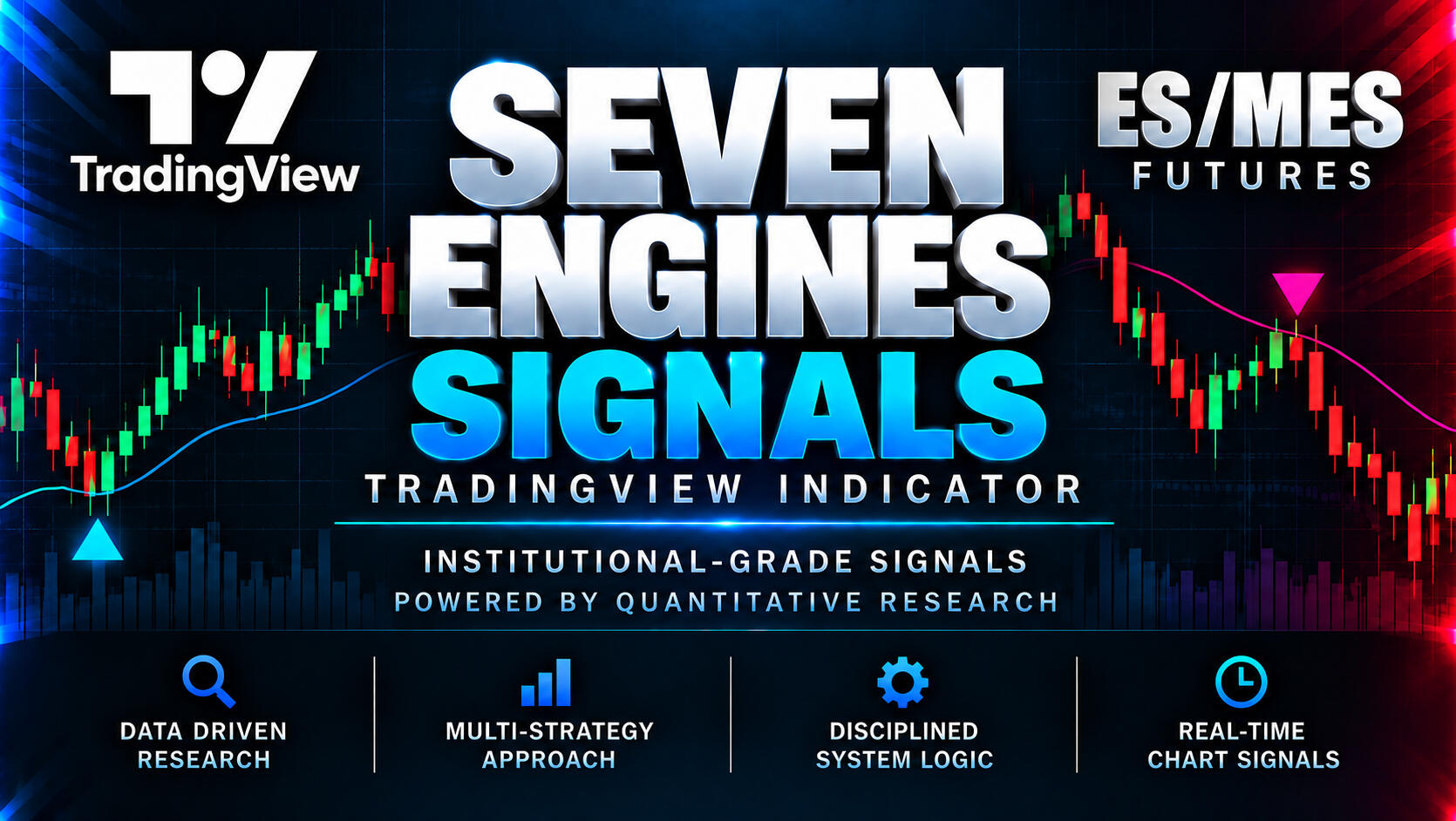
Clear entry signals • Reference stops & targets • TradingView alerts • Desktop & mobile
TRY IT FREE FOR 7 DAYS
TradingView required • No credit card required.
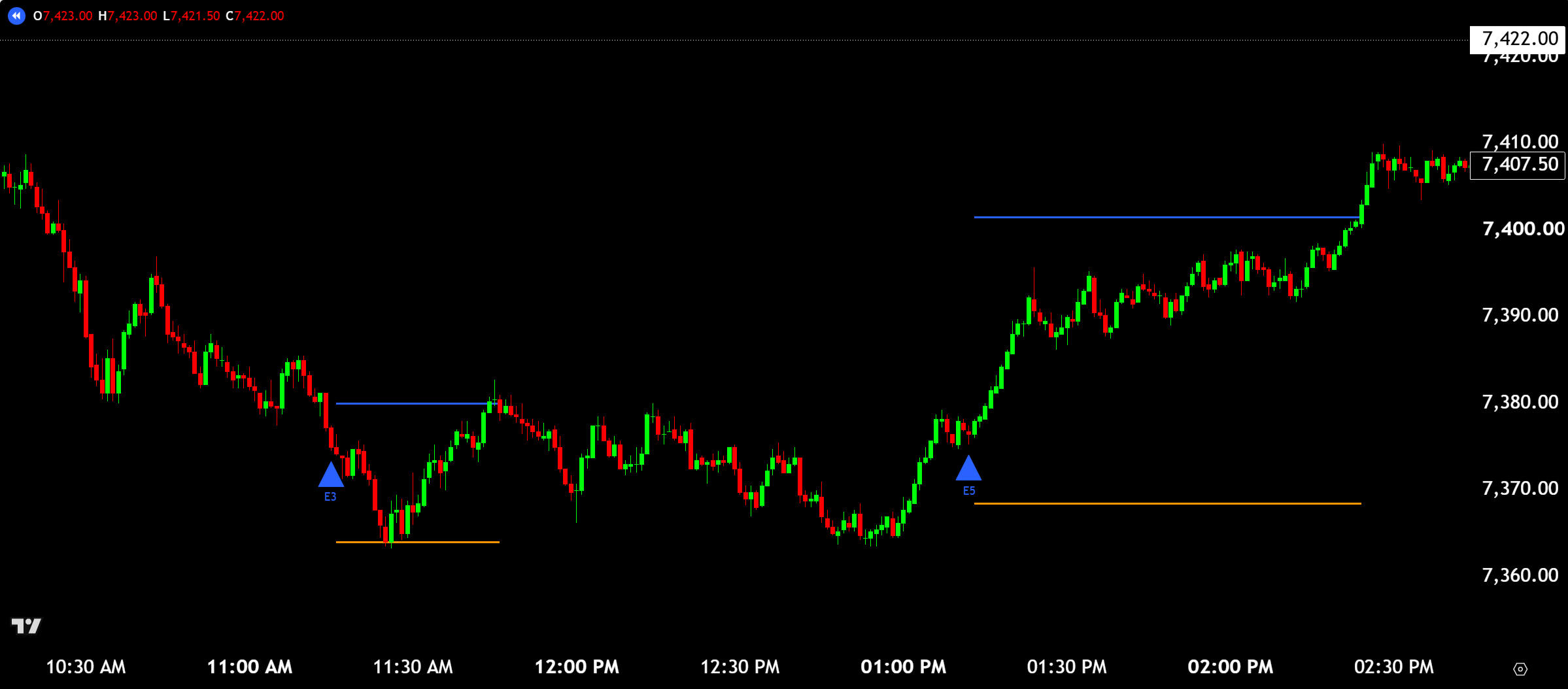
SEE THE SIGNALS ON YOUR CHART
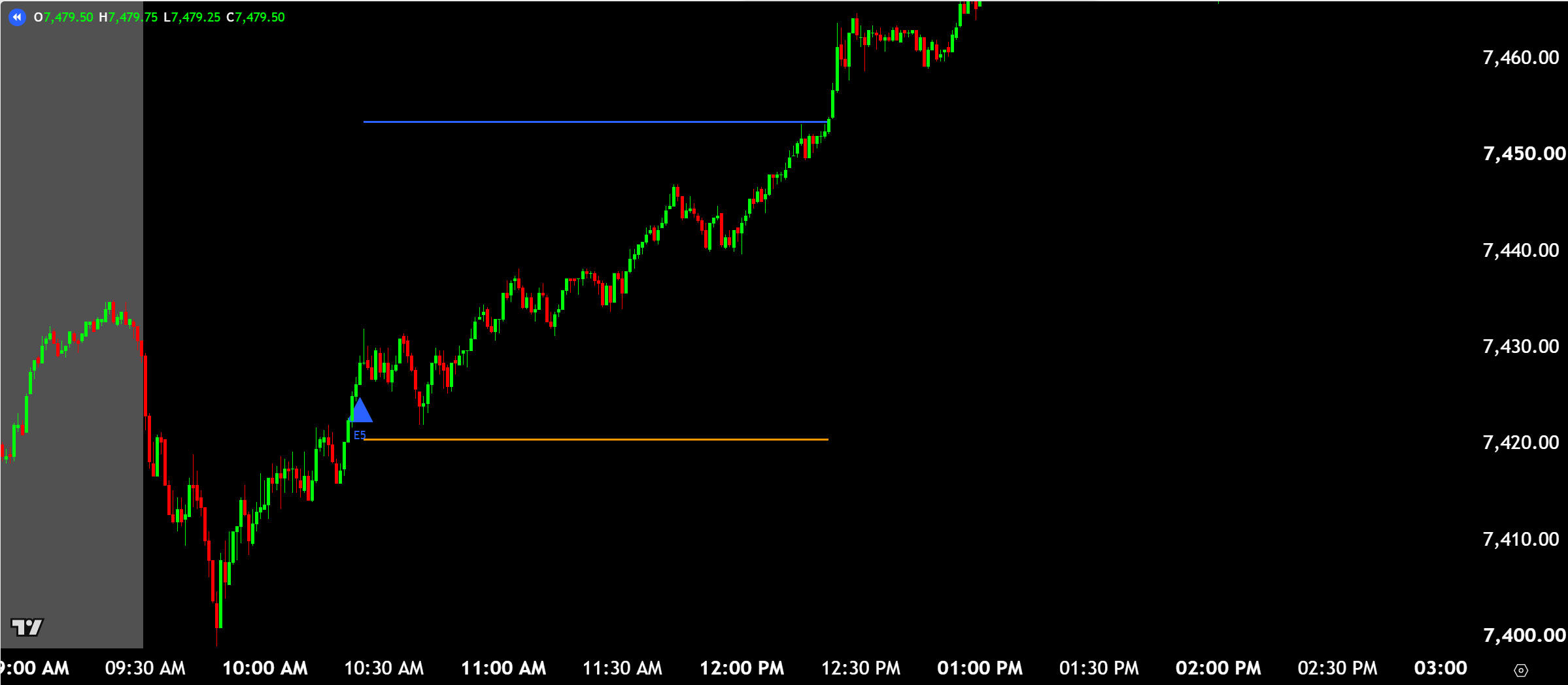
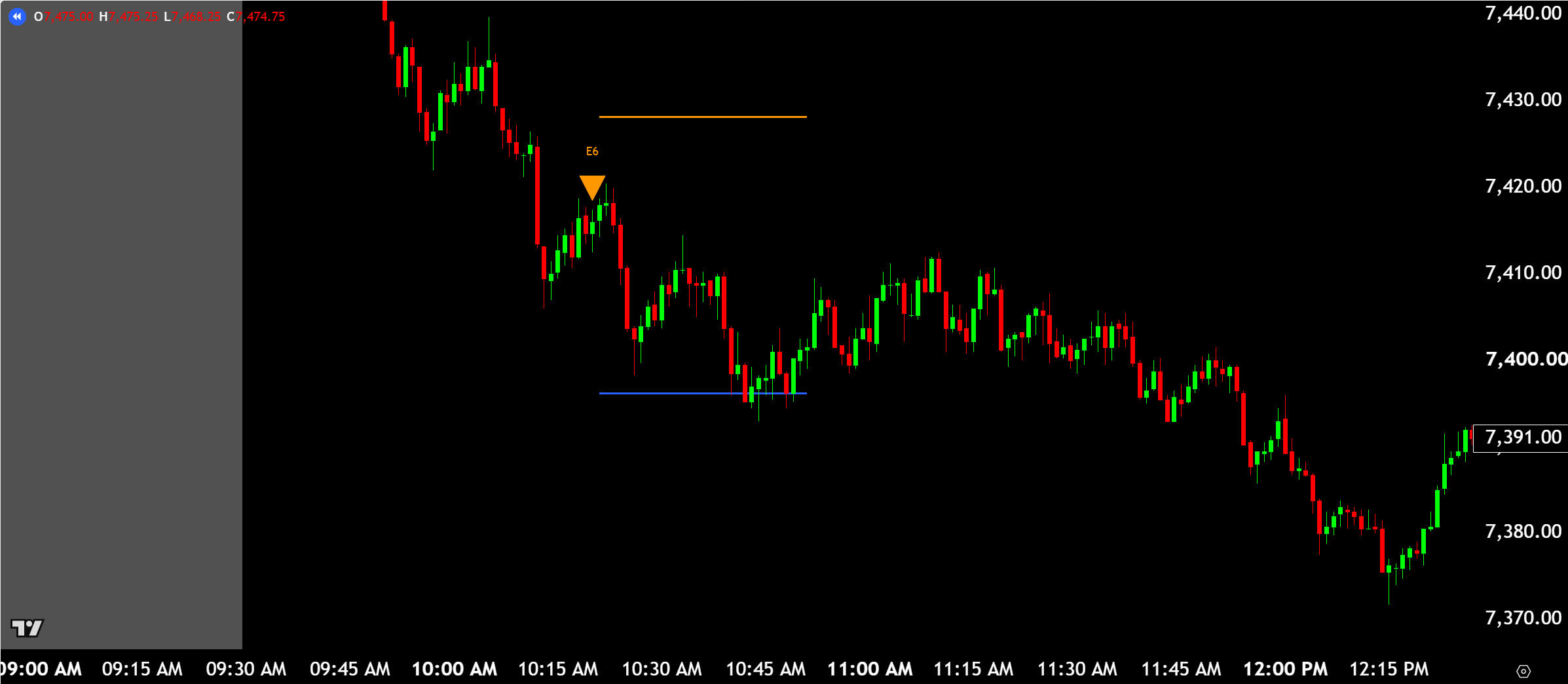
Seven Engines Signals identifies qualified setups directly on your TradingView chart. Each signal is labeled by strategy, with reference levels displayed where applicable. Blue indicates the initial target and orange indicates the initial stop.
NINE STRATEGIES. DIFFERENT MARKET CONDITIONS.
Markets don't behave the same way every day. Seven Engines Signals combines nine independently researched long and short signal strategies designed to identify different types of market opportunity—including momentum, trend continuation, pullbacks, mean reversion and statistically extended price movement.Instead of relying on a single setup, the indicator evaluates multiple approaches and displays a signal when the conditions for one of its strategies are met.
BUILT FROM MARKET RESEARCH — NOT A SINGLE INDICATOR
Seven Engines Signals was built from systematic research into ES market behavior. Each strategy uses a different combination of market structure, momentum, trend, volatility and statistical conditions to identify specific types of setups.The strategies were tested and refined using historical ES data before being combined into the Seven Engines Signals TradingView indicator.The goal isn't to generate constant signals. It's to wait for the conditions each strategy was designed to identify.
FIVE YEARS OF HISTORICAL ES RESEARCH
Seven Engines Signals is based directly on a systematic portfolio of nine ES strategies tested across a strict five-year historical period. The TradingView indicator uses the same qualifying entry logic and produces the same entry signals as the underlying research strategies.
5-YEAR HISTORICAL TEST PERIOD: SEP. 9, 2021 – SEP. 9, 2026
793 HISTORICAL TRADES
2.96 PROFIT FACTOR
61.92% PROFITABLE
$2,575 MAXIMUM DRAWDOWN
$186,587.50 GROSS HISTORICAL P/L
The historical portfolio included both long and short strategies, with 513 long trades and 280 short trades across different market conditions.
Historical backtest results are hypothetical and do not represent actual customer trading results. Results shown are before commissions, slippage and other trading costs. The historical strategy portfolio uses defined trade-management rules, while Seven Engines Signals is a TradingView indicator and does not execute or manage trades. Individual results will vary based on entries, exits, position sizing, trade management, execution and market conditions. Past performance is not indicative of future results.
IMPORTANT INFORMATION
RISK DISCLOSURESeven Engines Signals is a TradingView indicator provided for informational and research purposes. It displays algorithmically generated market signals and reference levels for ES and MES futures. It does not execute trades, manage brokerage accounts, or guarantee trading results.Futures trading involves substantial risk of loss and is not suitable for every trader. You should carefully consider whether trading futures is appropriate for you based on your experience, objectives, financial resources, and risk tolerance.Any hypothetical or backtested results presented on this website are based on historical market data and do not represent actual customer trading results. Hypothetical results have inherent limitations and may not account for factors affecting live trading, including slippage, liquidity, order execution, market conditions, data differences, commissions, connectivity, and other operational factors.No representation is being made that any account will or is likely to achieve profits or losses similar to any examples or historical results shown. Past performance, whether actual or hypothetical, is not necessarily indicative of future results.McKenzie Market Research provides trading software and research tools and does not provide personalized investment, financial, or trading advice. Users are solely responsible for determining whether and how to use the indicator and for all trading decisions made in their accounts.
Trading futures can result in losses greater than the amount initially deposited. Only trade with risk capital.
Contact McKenzie Market Research
© 2026 McKenzie Market Research. All rights reserved.
TERMS OF USELast Updated: September 2026These Terms of Use govern your purchase, access to, and use of the Seven Engines Signals TradingView indicator (“Seven Engines Signals”), provided by McKenzie Market Research (“MMR,” “we,” “us,” or “our”). By purchasing, accessing, or using Seven Engines Signals, you agree to these Terms.1. Software LicenseYour subscription provides you with a limited, non-exclusive, non-transferable license to use Seven Engines Signals for your own personal trading, research, and analysis.Your subscription does not transfer ownership of the software, source code, trading logic, algorithms, research methodology, or other intellectual property.You may not copy, redistribute, resell, sublicense, share, reproduce, reverse engineer, attempt to obtain the source code or underlying proprietary logic, or otherwise provide access to Seven Engines Signals to another person without written permission from McKenzie Market Research.2. TradingView Requirement and AccessSeven Engines Signals is an invite-only indicator designed for use with TradingView. A compatible TradingView account, internet connection, market data, and any other required third-party services are the user's responsibility and are not included with the Seven Engines Signals subscription.Access is granted to the TradingView username supplied during checkout. Customers are responsible for providing an accurate TradingView username. Access is intended solely for the subscriber to whom it was granted and may not be shared or transferred.McKenzie Market Research is an independent software provider and is not affiliated with, sponsored by, or endorsed by TradingView.3. Subscription and BillingSeven Engines Signals is offered as a recurring monthly subscription at the price displayed at the time of purchase. Your payment method will be charged automatically each billing period until the subscription is canceled.Prices for new subscriptions may change at any time. Any changes affecting existing subscriptions will be handled in accordance with applicable law and the terms presented with the subscription.4. CancellationYou may cancel your subscription at any time. Cancellation stops future recurring charges but does not ordinarily provide a refund for a billing period that has already begun.Access to Seven Engines Signals may continue through the end of the applicable paid subscription period and may then be removed.5. RefundsBecause Seven Engines Signals is digital software for which access can be provided shortly after purchase, subscription payments are generally non-refundable once access has been activated, except where otherwise required by law.If you experience an access or billing problem, contact McKenzie Market Research using the contact information provided on this website.6. Indicator Only — No Trade ExecutionSeven Engines Signals is a TradingView indicator. It identifies qualifying market conditions and displays signals and reference levels on a user's chart.Seven Engines Signals does not place, execute, manage, or close trades in a user's brokerage account. Reference stop and target levels, where displayed, are informational tools and do not constitute orders or guarantees that those levels will be reached or filled.Users remain solely responsible for deciding whether to enter, manage, or exit any trade.7. Trading Risk and No Investment AdviceSeven Engines Signals is software provided for informational, educational, and research purposes. McKenzie Market Research does not provide personalized investment, financial, or trading advice and does not act as a broker, investment adviser, commodity trading adviser, or fiduciary through the sale or provision of this software.Futures trading involves substantial risk of loss and is not suitable for every trader or investor. Users are solely responsible for determining whether futures trading is appropriate for them, whether and how to use Seven Engines Signals, and for all trading decisions and activity in their accounts.Trading futures can result in losses greater than the amount initially deposited. Only trade with risk capital.8. Historical, Hypothetical, and Backtested ResultsAny performance results, statistics, charts, trade examples, research findings, or other historical results presented in connection with Seven Engines Signals may be based on hypothetical or backtested trading.Hypothetical and backtested performance does not represent actual customer trading and has inherent limitations. Actual results may differ substantially due to factors including slippage, liquidity, commissions and fees, order execution, market conditions, data differences, chart settings, connectivity, and other factors.No representation or guarantee is made that any user will achieve profits, avoid losses, or experience results similar to any examples or historical results shown.Past performance, whether actual or hypothetical, is not necessarily indicative of future results.9. Software Operation, Signals, and UpdatesWe may update, modify, correct, improve, or discontinue features of Seven Engines Signals as the software is maintained and developed.We do not guarantee uninterrupted or error-free operation, continuous availability of signals, compatibility with every TradingView configuration or data source, or compatibility with future changes made by TradingView or other third-party services.Market data, symbol selection, chart settings, TradingView functionality, and other factors outside McKenzie Market Research's control may affect the operation or display of the indicator.Users are responsible for verifying their own chart configuration and reviewing signals and reference levels before making trading decisions.10. AlertsSeven Engines Signals may provide compatibility with TradingView alert functionality. Alerts depend on TradingView, the user's account and settings, internet connectivity, devices, data services, and other third-party systems.McKenzie Market Research does not guarantee that an alert will be generated, transmitted, delivered, or received at any particular time or without interruption or delay. Users should not rely solely on alerts for risk management or trade management.11. No Guarantee of ResultsNo indicator, trading strategy, signal service, or research methodology can guarantee profits or eliminate the risk of loss.Signals represent conditions identified by the software according to its programmed logic. A signal does not mean that a trade will be profitable and should not be interpreted as a recommendation or guarantee of a particular market outcome.You assume responsibility for any decision to use information provided by Seven Engines Signals in connection with trading.12. Limitation of LiabilityTo the maximum extent permitted by applicable law, McKenzie Market Research will not be liable for trading losses, lost profits, lost opportunities, missed or delayed signals or alerts, data loss, interruption of service, third-party service failures, or indirect, incidental, special, consequential, or similar damages arising from the use of or inability to use Seven Engines Signals.13. Termination of AccessWe may suspend or terminate access for unauthorized sharing or redistribution, attempted circumvention of access controls, fraudulent activity, nonpayment, abuse of the service, or material violation of these Terms.Termination for violation of these Terms may result in loss of access without refund to the extent permitted by applicable law.14. Intellectual PropertySeven Engines Signals, including its software, source code, trading and signal logic, algorithms, research methodology, design, documentation, branding, graphics, and related materials, is owned by McKenzie Market Research or its licensors and is protected by applicable intellectual-property laws.Nothing in your subscription grants ownership of any McKenzie Market Research intellectual property.15. Third-Party ServicesSeven Engines Signals depends in part on third-party products and services, including TradingView. Payment processing may also be provided by third-party payment processors.McKenzie Market Research does not control and is not responsible for the availability, functionality, pricing, policies, data, or performance of third-party services. Changes or interruptions to those services may affect your ability to access or use Seven Engines Signals.16. Changes to These TermsThese Terms may be updated periodically. The current version will be posted on this website with its effective or last-updated date.Continued use of Seven Engines Signals following an update constitutes acceptance of the revised Terms to the extent permitted by applicable law.17. ContactQuestions concerning these Terms or your Seven Engines Signals subscription may be sent to:McKenzie Market Research
[email protected]
PRIVACY POLICYLast Updated: September 2026McKenzie Market Research (“MMR,” “we,” “us,” or “our”) respects your privacy. This Privacy Policy explains the information we may collect when you visit SevenEnginesStrategy.com, purchase or use Seven Engines Signals, or communicate with us.1. Information We CollectWe may receive information you voluntarily provide when purchasing Seven Engines Signals or contacting us, including your name, email address, TradingView username, and communications you send to us.We may also receive limited transaction and subscription information associated with your purchase, such as payment status, subscription status, transaction dates, and amounts paid.2. Payment InformationPayments and recurring subscription billing are processed by Stripe. McKenzie Market Research does not directly collect or store your complete credit or debit card information.Payment information submitted during checkout is processed by Stripe in accordance with Stripe's own privacy practices and policies.3. TradingView UsernameYour TradingView username is collected during checkout so that access to the Seven Engines Signals invite-only TradingView indicator can be granted and administered.We may use your TradingView username to provide or remove indicator access, administer your subscription, provide customer support, and help prevent unauthorized access or sharing.Your TradingView username is not your TradingView password. McKenzie Market Research does not need or request your TradingView password.4. How We Use InformationWe may use information we collect to provide and administer your Seven Engines Signals subscription; grant and manage TradingView indicator access; process and verify subscription status; provide customer support; communicate with you about your account, subscription, or indicator; maintain and improve our services; prevent fraud or unauthorized use; maintain business records; and comply with applicable legal obligations.We do not sell your personal information.5. Third-Party ServicesWe use third-party services to operate portions of our business. These may include Stripe for payment processing and subscription billing, Carrd for website hosting, and TradingView in connection with access to and use of Seven Engines Signals.These third-party services operate independently and may collect or process information according to their own privacy policies and terms. McKenzie Market Research does not control the privacy practices of these third parties.6. Cookies, Analytics, and Website DataOur website and third-party services used to operate it may use cookies, analytics technologies, or similar technologies for website functionality, security, payment processing, analytics, and related services.These technologies may collect information such as browser or device information, approximate location derived from an IP address, pages viewed, referral information, and interactions with the website, depending on the services and features enabled.7. Information SharingWe may share information with service providers when reasonably necessary to operate the website, process payments, administer subscriptions, provide or remove indicator access, provide customer support, prevent fraud or unauthorized use, or comply with applicable law.We do not sell or rent customer personal information to third parties for their independent marketing purposes.8. Data RetentionWe retain personal information for as long as reasonably necessary to provide our services, administer subscriptions and indicator access, maintain business and transaction records, resolve disputes, enforce agreements, prevent fraud or unauthorized use, and satisfy applicable legal or regulatory requirements.9. Data SecurityWe take reasonable measures to protect personal information under our control. However, no internet transmission, electronic storage system, website, or online service can be guaranteed to be completely secure.Customers should never send McKenzie Market Research their TradingView password, brokerage password, payment-card number, or other account credentials by email or through ordinary customer-support communications.10. Your Choices and RequestsYou may contact us to request access to, correction of, or deletion of personal information that we maintain about you, subject to information we may need or be permitted to retain for legitimate business, legal, accounting, fraud-prevention, dispute-resolution, or regulatory purposes.You may cancel your Seven Engines Signals subscription according to the cancellation provisions described in our Terms of Use.Depending on where you live, applicable privacy laws may provide additional rights regarding your personal information.11. Children's PrivacySeven Engines Signals and our services are intended for adults and are not directed to children. We do not knowingly collect personal information from children through the sale of Seven Engines Signals.12. Changes to This Privacy PolicyWe may update this Privacy Policy periodically. The current version will be posted on this website with its effective or last-updated date.13. ContactQuestions or requests regarding this Privacy Policy may be sent to:McKenzie Market Research
[email protected]